

Combination of host-country language learning and social inclusion tools for immigrants
Language School PELICAN has recently become a partner of Lingua+ , a project aimed at linking the teaching of the host country’s language with a more accurate presentation of the country’s economic, cultural and social reality to those coming from outside. The newly created combination of tools include both proven methods of foreign language teaching and more general principles of intercultural education while respecting the cultural and social uniqueness of the target groups.
Introduction to the project
The Lingua + project addresses the urgent issue of the integration of immigrants into European society. Basic knowledge of the host language is a key factor in determining integration success across Europe. Our experience tells us that existing methodologies and educational approaches for adult learners lack a holistic approach. Lingua + brings innovation to the language integration of immigrants by offering tools for language teachers, using state-of-the-art methodologies and practices embedded in socio-cultural interplay.
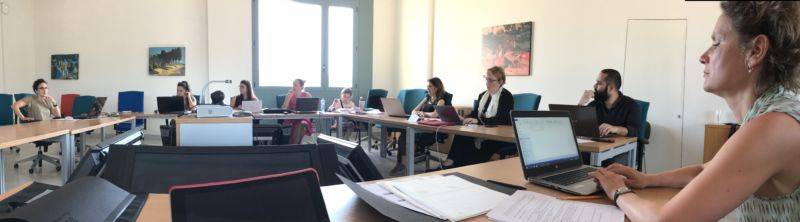
Main OUTPUTs of the project
- Repository of innovations in teaching host country language to migrants and refugees as a result of joint research by all project partners. Its content consists of a selection of proven methods and techniques. In the process of creating the material, academic sources, practical experiences and results, drawn from organisations dealing with this issue, were taken into account.
- Practices on social inclusion
- Lingua+ Handbook for language teachers, trainers, volunteers including theoretical guidance and analysis of language learning for adult migrants and refugees.
- Lingua+ Learning Paths Multimedia presentation (download in Czech and English version HERE), containing structured textual descriptions of individual innovative methods, accompanied by instructional videos from piloting these methods.
Target group
A key recipient of the project’s outputs, is the foreign nationals community in Iceland. Currently, migrants make up 10% of the island’s total population and this number is continuing to increase.
In the Czech Republic, the project focuses on communities of foreign nationals living in the country. The training block prepared for these people is a combination of the best practices in two areas:
- Teaching Czech as a second language for foreign nationals in the Czech Republic
- Social inclusion and information on the legal, economic and social reality of the Czech Republic
Project partners
Jazyková škola PELICAN (Czech Republic),
University of Florence (Italy),
Synthesis-Center (Cyprus),
Astofan (Iceland),
The Mosaic Art and Sound (Great Britain)